Weak or manual product recommendations
Hand-curated widgets go stale the week after you build them
Maestra Platform keeps them current automatically, an all-in-one retention marketing platform for ecommerce brands, with a forward-deployed marketer setting the rules.
Brands running on Maestra






The problem
Merchandising by hand doesn't scale past a handful of SKUs
Someone on the team is still hand-selecting which products show up in each recommendation slot, one placement at a time. It works for a small catalog, but every new SKU adds more manual work, and most of the catalog never gets a proper recommendation at all.
What we hear from brands
a leather handbag brand's small ecommerce team manually manages merchandising and A/B tests, limiting scale
an automotive parts retailer describes manual, time-consuming setup of upsells and bundles as SKU count expands
a men's grooming brand cites underperforming product pages and lean team bandwidth for testing and optimization
The new way
When browsing isn't enough, ask the customer directly
Product-picking quizzes cure decision fatigue by asking a few short questions and surfacing matching products immediately, while capturing preferences that sharpen targeting across every channel. Pair that with value-packed bundles built from products that actually go together, and discovery stops depending on the customer getting lucky.
Customer proof
Four thousand SKUs, matched down to the cut

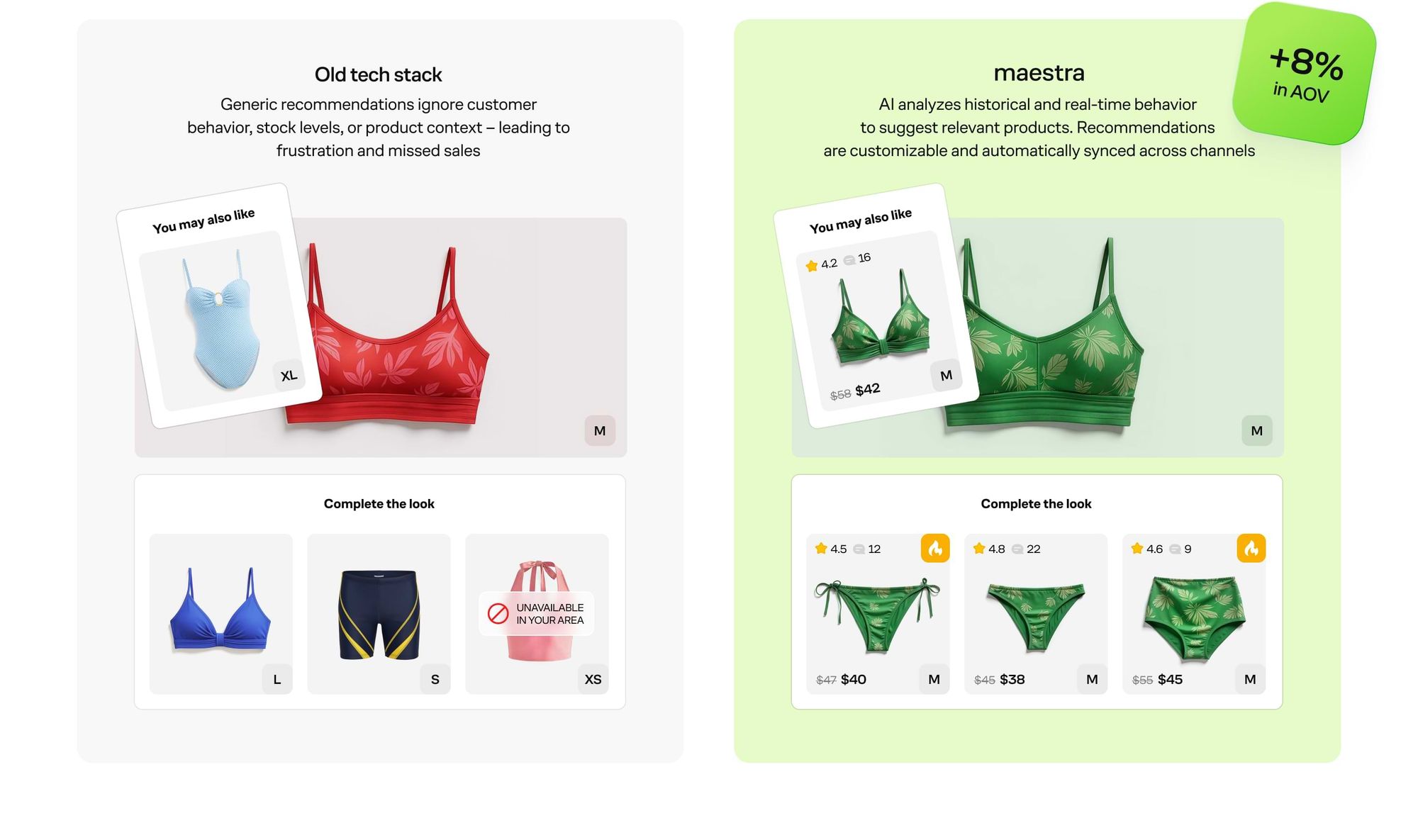
Swimwear varies by fit, cut, and team, and a widget that ignores those is noise. Recommendations that respect the attributes now assist seven percent of sales.
7%
of sales assisted by product recommendations

How it works
What gets rebuilt before you go live
Data and integrations
Customer records, order history, and the connections to your store move first, so the profiles are whole before anything sends.
Deliverability
Domains, sender signatures, and Postmaster are set up and monitored, because a migration that lands in spam is not a migration.
Flows and campaigns
The programs you run today are rebuilt and the ones you never had time for get launched alongside them.
The platform
Why the data model is the product
Most platforms bolt commerce concepts onto a generic contacts table. Maestra starts from orders, catalog, and behavior, which is why segmentation, recommendations, and site personalization read the same customer rather than three approximations of one.
Including
Your forward-deployed marketer
Escalation without a ticket queue
A shared channel means a problem is described once, to the person who already knows the account, and the answer comes back in minutes rather than business days.
Shared Slack channel with your marketer
5-minute response time versus 72 hours elsewhere
No first-line triage before you reach someone who knows you
Replace your stack
Brands usually replace three to five tools
Email and SMS, lead capture, recommendations, loyalty, and whatever glue holds them together. Each of them works better once it reads the same profile as the rest.
Have a look at the platform first
You do not have to decide anything to see how the pieces fit together. Start on the product pages and work back to your own stack.